Electrical troubleshooting and repair in Alpharetta, GA is the process of diagnosing a fault in your home’s wiring, outlets, breakers, or panel, finding exactly where the problem lives, fixing it, and confirming the surrounding circuits are safe. It covers everything from a single dead outlet to a breaker that won’t hold to a partial power outage that’s left half your house dark.
Alpharetta’s housing stock makes this work interesting. The subdivisions that filled in along Haynes Bridge Road and through Windward during the 1980s and 1990s were built with panels and wiring that made sense at the time. Thirty-plus years later, those builder-grade systems are carrying loads they were never sized for, and faults start showing up in predictable ways. Closer to the Milton border and in the newer construction near Avalon, the wiring is younger but the homes are larger, with more circuits, more square footage, and often detached garages or outbuildings that add complexity.
All Purpose Heating & Air Conditioning has been doing this work for more than 35 years. We’re locally owned, we’re licensed and insured, and our crews run north on GA-400 to Alpharetta every week. When something in your home stops working the way it should, we come out, find the problem, and fix it right.
If you’re not sure what you’re dealing with yet, give us a call or request your estimate and we’ll walk you through it.
Most calls start with something small that turns out to be more than it looks. Here are the situations we hear about most from Alpharetta homeowners.
Flickering or dimming lights. If lights flicker in one room, the cause is often a loose connection at the outlet, switch, or fixture. If lights flicker throughout the house, that points toward the panel or the utility feed. In homes built in Windward and the Haynes Bridge corridor during the late 1980s and 1990s, we sometimes find aluminum branch wiring or connections that have worked loose over decades of heating and cooling cycles.
A dead outlet or dead circuit. A single dead outlet is usually a tripped GFCI upstream, a loose wire, or a failed device. A full dead circuit means something tripped or failed at the breaker. Either way, it needs to be traced, not guessed at.
A breaker that keeps tripping. A breaker that trips once after an overload is doing its job. A breaker that trips repeatedly under normal use is telling you something: the circuit is overloaded, the breaker is worn out, or there’s a fault in the wiring. Older builder-grade panels are more prone to this as breakers age.
A burning smell near an outlet or panel. Stop using the circuit and call immediately. A burning smell means heat is building somewhere it shouldn’t be. This is not a wait-and-see situation.
Partial power outage. Power to part of the house but not all of it usually points to a failed breaker, a loose main connection, or a problem with one leg of the utility feed. It needs a meter and a trained eye to sort out quickly.
If any of these sound familiar, our Alpharetta electrical services page covers the full range of what we handle for homeowners here.
We don’t start with assumptions. We start with a meter.
When we arrive, the first step is a systematic diagnosis. That means checking voltage at the affected outlets or fixtures, testing the breaker under load, and tracing the circuit back toward the panel if the problem isn’t obvious at the device. A multimeter and a clamp meter tell us what’s actually happening, not what we think might be happening. This part of the job takes as long as it takes. A fault that’s close to the surface, like a loose wire at a receptacle, is found quickly. A fault buried inside a wall or showing up intermittently can take longer to locate, and that time is a real part of what drives the overall cost of the job.
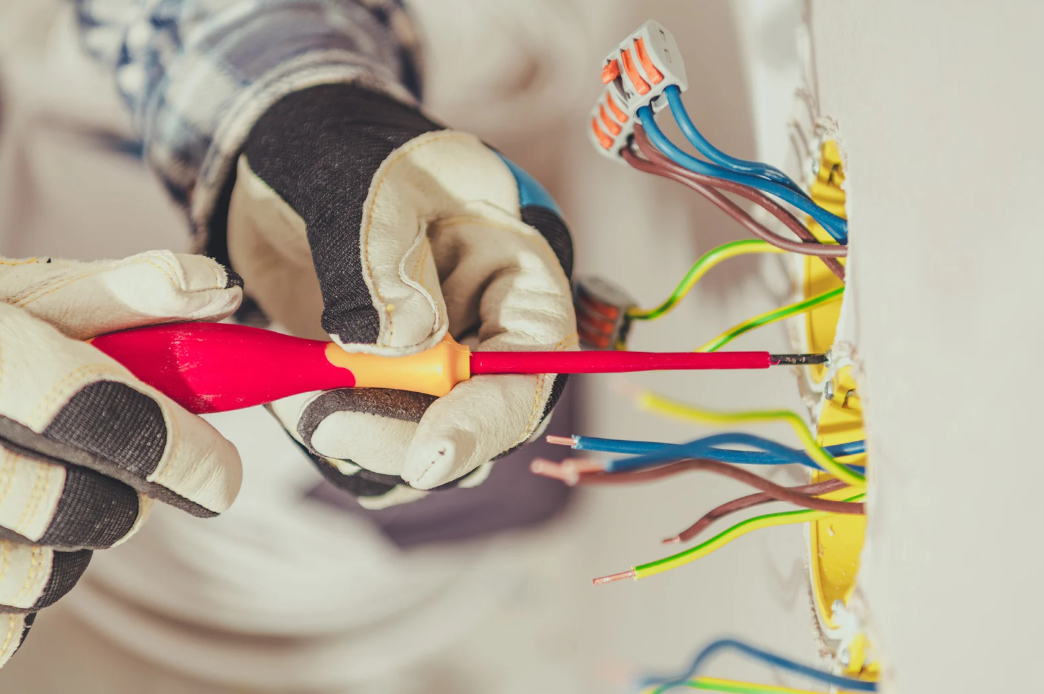
Once we’ve located the fault, we make the repair. That might be tightening or replacing a connection, swapping a failed breaker, replacing a damaged section of wire, or installing a new GFCI or AFCI device where one is needed to bring the circuit up to current code. The repair itself varies in complexity, and complexity affects cost. Finding one loose wire at a junction box is a short job. Finding a wiring fault that runs through finished walls is a longer one.
After the repair, we don’t just pack up. We run a safety check on the related circuits, confirm breaker function, and verify that GFCI and AFCI protection is working where it’s required. If we find something else that needs attention during that check, we tell you plainly what it is and what your options are.
Want to understand what goes into this kind of work before we arrive? Our electrical troubleshooting service page explains the process in more detail.

Troubleshooting and repair covers a wide range of electrical problems, but sometimes a service call turns up something bigger underneath. That’s common in Alpharetta homes built in the 1980s and 1990s, where a 100-amp or 150-amp builder-grade panel is now being asked to handle EV chargers, upgraded HVAC systems, home offices, and more. If your panel is undersized or the breakers are failing regularly, a panel upgrade may be the right next step rather than repeated repairs.
Alpharetta also has its own permit and inspection requirements for electrical work, and any repair or upgrade that requires a permit needs to be done by a licensed contractor who pulls it correctly. We handle that process as part of the job.
Larger lots toward the Crabapple area and the Milton border often come with detached garages, workshops, or pool equipment that run on their own subpanels or dedicated circuits. If a fault is traced back to one of those structures, the repair scope can be different from a standard interior circuit. We’ve seen it all, and we scope the work honestly before anything starts.
If your service call points toward a panel that’s reached the end of its useful life, take a look at our panel upgrade services for Alpharetta homeowners to understand what that work involves and what to ask about.
All Purpose Heating & Air Conditioning works Alpharetta and the surrounding north metro every week. Give us a call or request your estimate and we’ll get you on the schedule.
+